


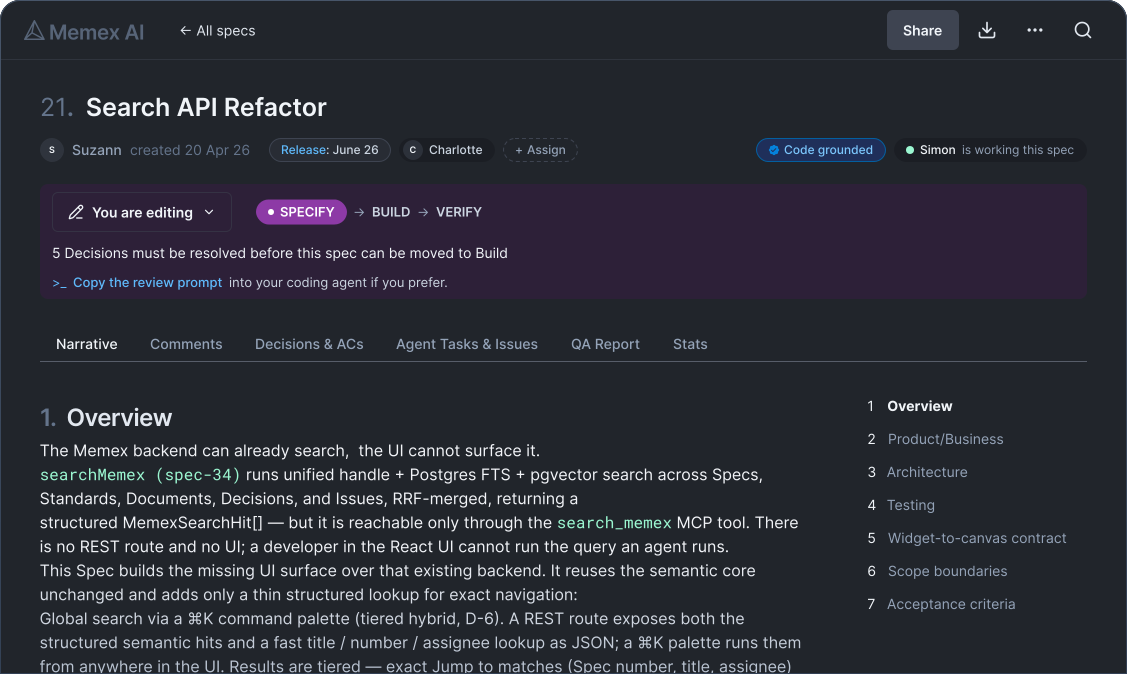
An MD spec is a flat document. Memex makes it an enforceable database
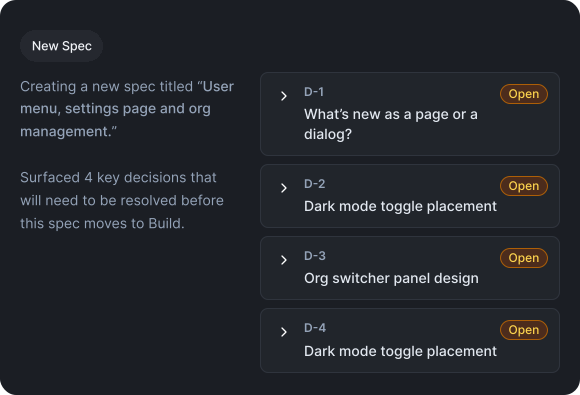
It hosts the why, decisions, tasks and AC, forcing the agent to focus on each task with the exact slice of relevant context.

For frontier builders running AI coding agents at scale
MD docs are why agents build things wrong & are not a living team wide context layer. Instead, spec features with your agent and push them into Memex via MCP. Each decision you make becomes a locked-in agent task with an AC it must build to, each spec compounding into a proactive, living brain for your team.
Works with your tools
The Problem
A doc is just prose, so nothing holds your agent to tasks. It interprets, skips work, and hallucinates.
Hundreds of MD files, never all up to date. Neither human nor agent knows which to trust as the codebase changes.
Endless re-prompting and reviewing to get it right. Worse on long-horizon tasks & brownfield code.
The solution
assigns & tracks work. agents query & build from.
It hosts the why, decisions, tasks and AC, forcing the agent to focus on each task with the exact slice of relevant context.
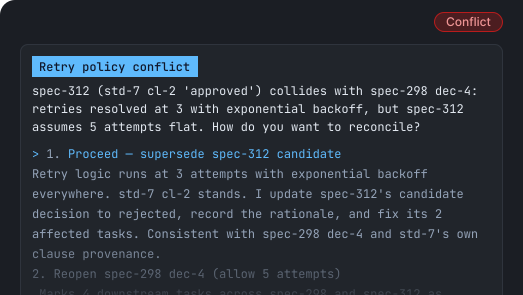
Always current, no upkeep. Memex surfaces what teammates are deciding, catches when your work collides, and makes every spec faster than the last.
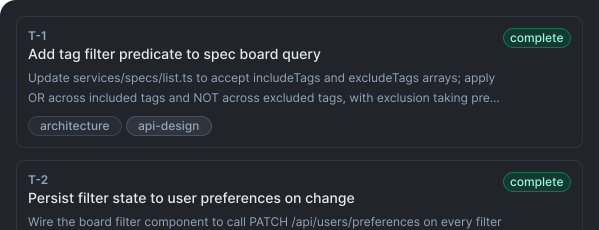
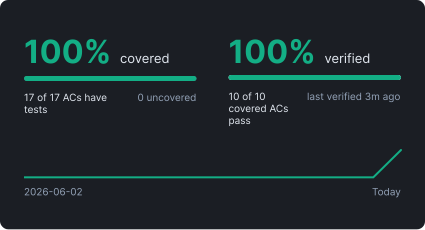
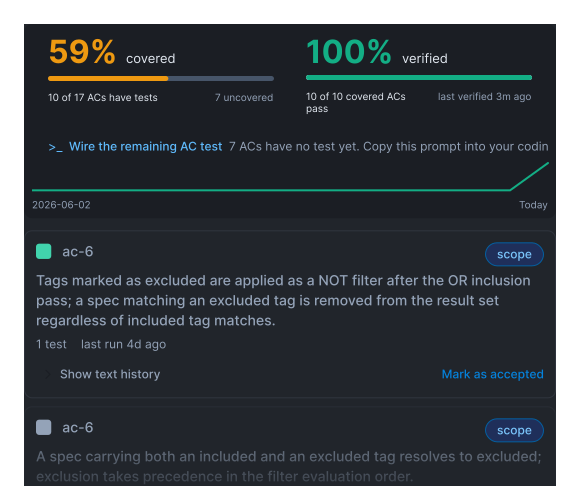
Each task carries acceptance criteria, verified in CI, so "done" is proven, not claimed.
Humans and agents work one live spec you share, comment on and review or even push into Slack, not a hard to read MD file passed by hand.
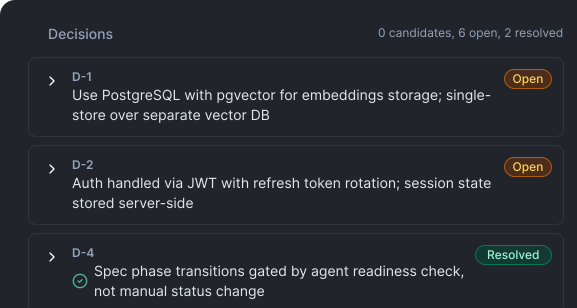
Every task is checked against your rules. When code and a rule disagree, Memex flags it and you decide: correct the code, or update the rule.
Use Memex AI when you are ready to specify, build then verify a new feature with AI.
No. Trackers own who is doing what, when it ships, and status, the work before a spec is ready. Memex is the intent layer between your tracker and your code. Some teams find it enough on its own, but it's designed to work alongside Jira, GitLab and Linear.
No. Memex is a harness for the coding agents you already use, connected over MCP.
Keep them and run Memex alongside, or turn them into standards. A standard is a structured, enforced version of a CLAUDE.md: consulted on every task an agent claims and searched semantically, not a flat file skimmed once. When code and a standard diverge, the Drift Inbox flags it with a fix.
Spec-as-source, and its ancestor MDD (model-driven development), generate all your code from the spec one-to-one, with humans never touching it. It kept breaking because real systems are too messy for that. Memex is spec-anchored: your real code stays in your repo, kept honest by your tests, and we add the CI loop without generating code from the spec.
Keep planning in your tracker. Once a ticket is prioritised, you write one living spec in Memex. The tracker and your repo stay exactly as they are.
You don't keep it in sync by hand. Decisions and Issues are written back as the agent builds, so the spec is fed by the build, and any drift from your standards is flagged with a fix.
Six linked records: the narrative (what and why), decisions, acceptance criteria, tasks, issues, and the test signals that verify it.
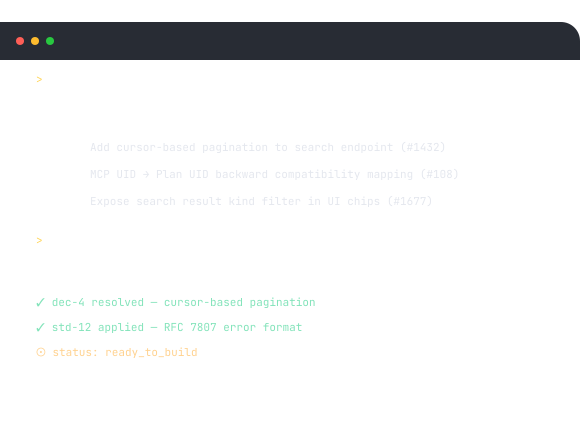
Memex is MCP-native. Your agent lists your memexes, queries a task's scoped context, resolves decisions and writes decisions and Issues back, all over MCP, inside the same spec you see. One command wires it up.
Your codified rules and conventions. Every rule is a clause an agent must consult on every task it claims, injected into its context, not a style guide it forgets.
New to Memex? Download the Understanding Memex guide (PDF).